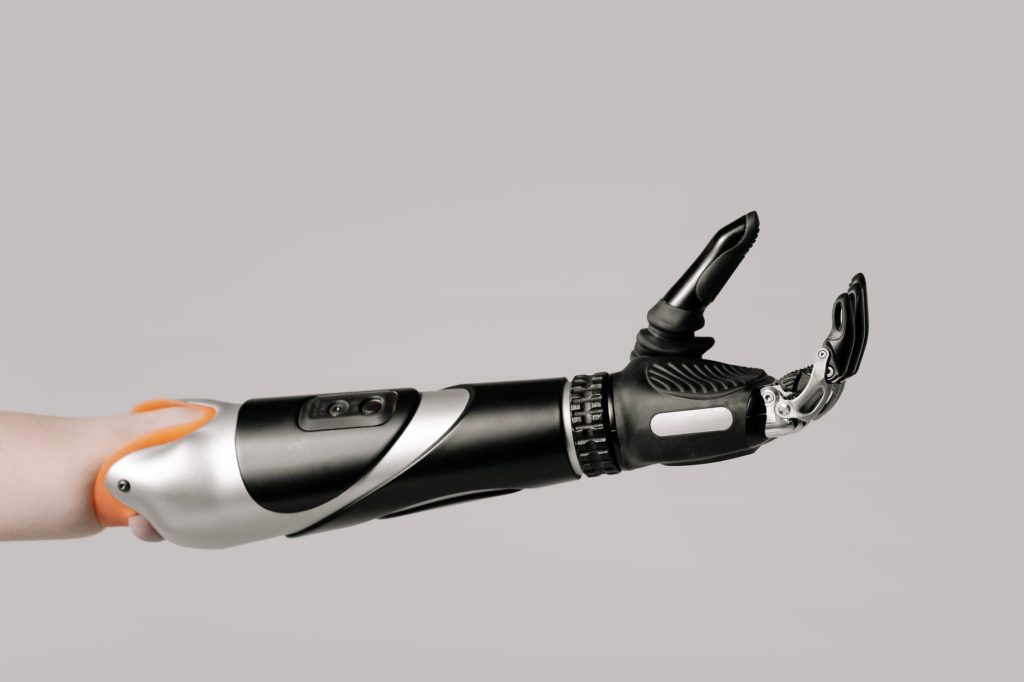
Machines are genuinely impressive until they’re not, and the gap between “impressive” and “reliable” is where humans still do most of the real work. The question of 2. Why Technology Cannot Replace Humans: Key Reasons Explained keeps coming up, and honestly, the answer hasn’t changed much even as the tools have gotten faster. Automation handles volume. Everything else is a different story.
Where Machines Consistently Fall Short
Start with medical diagnosis, since that’s a high-stakes test. AI diagnostic tools still carry error rates in the 10–15% range on complex cases, which sounds small until it’s your scan being misread. Human clinicians catch those edge cases partly because they ask follow-up questions, read body language, and factor in context a model never received. That kind of situational awareness is exactly what algorithmic logic struggles with.
Ethical judgment is a related problem. An algorithm optimises for whatever metric you give it, so if the metric is slightly wrong, the outcome can be badly wrong. A human pauses, feels uneasy, questions the goal itself. That uneasiness is a feature, not a flaw, and no current system has anything resembling it. The 2023 McKinsey report on automation found roughly 30% of tasks across the economy are automatable, but very few whole jobs are. A task is repetitive and bounded; a job involves switching between tasks, reading a room, improvising when the plan falls apart.
Human Skills That Remain Irreplaceable
Empathy isn’t a soft skill in the decorative sense. When a person feels genuinely heard, it triggers oxytocin release, which builds trust and cooperation, and that physiological response doesn’t happen because a system produces sympathetic-sounding text. In service work, from what I’ve seen in client-facing industries, emotional labor accounts for something close to half the actual value delivered. You can automate the ticket queue. You can’t automate the reason a customer stays loyal.
Creative originality is the other sticking point. Recombining patterns from training data produces fluent, plausible output, sure, but a genuine creative leap (the kind that reframes a problem rather than solving it within existing terms) requires lived experience, personal stakes, and sometimes a willingness to be wrong in public. Pattern matching alone won’t get you there. I’ll admit I’m genuinely uncertain how long that stays true, but for now it holds.
What This Means for Work
Technology is a real amplifier. It makes a good analyst faster and a good teacher more scalable. But 2. Why Technology Cannot Replace Humans: Key Reasons Explained comes down to this: the skills that create trust, navigate ambiguity, and produce original thought are irreducibly tied to being human. Invest in those. Let the machines handle the parts that bore you.
FAQs
Can AI ever fully replace human workers?
Not fully. AI can automate discrete tasks but whole jobs involve improvisation, ethics, and relationship-building that current systems can’t replicate.
What jobs are safest from automation?
Roles built around empathy, complex judgment, and unpredictable problem-solving, such as therapy, skilled trades, and senior leadership, are hardest for machines to displace.
Why can’t robots replicate human creativity?
Creativity draws on lived experience and personal stakes. AI recombines existing patterns but can’t generate the kind of original reframing that comes from actually being in the world.